Matthew A. Kenworthy’s Research
Table of Contents
Exomoons
I’ve been interested in finding exomoons through two indirect methods (Radial Velocity on their parent planet and the way they sculpt the circumplanetary disk) and directly detecting them through their thermal radiation. Exoplanets are challenging enough to detect, so exomoons appear at first blush to be even more challenging!
Tidally Heated ExoMoons
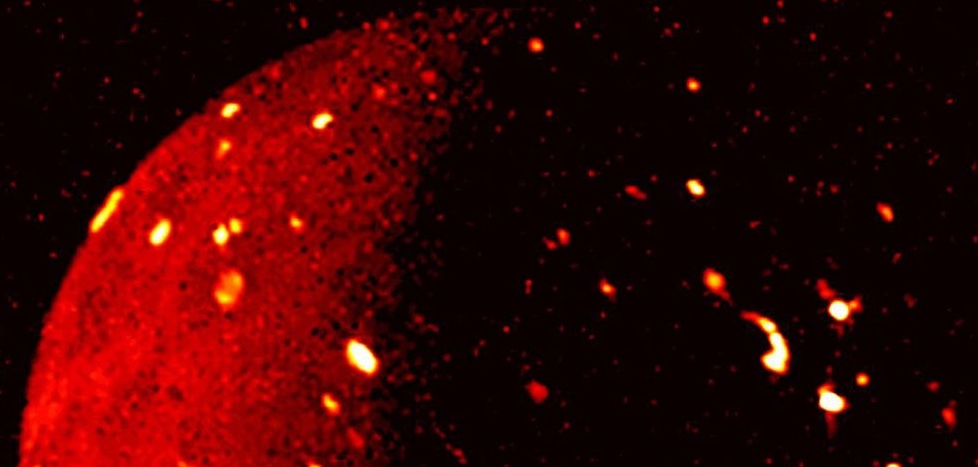
Figure 1: Io volcanoes seen in thermal infrared
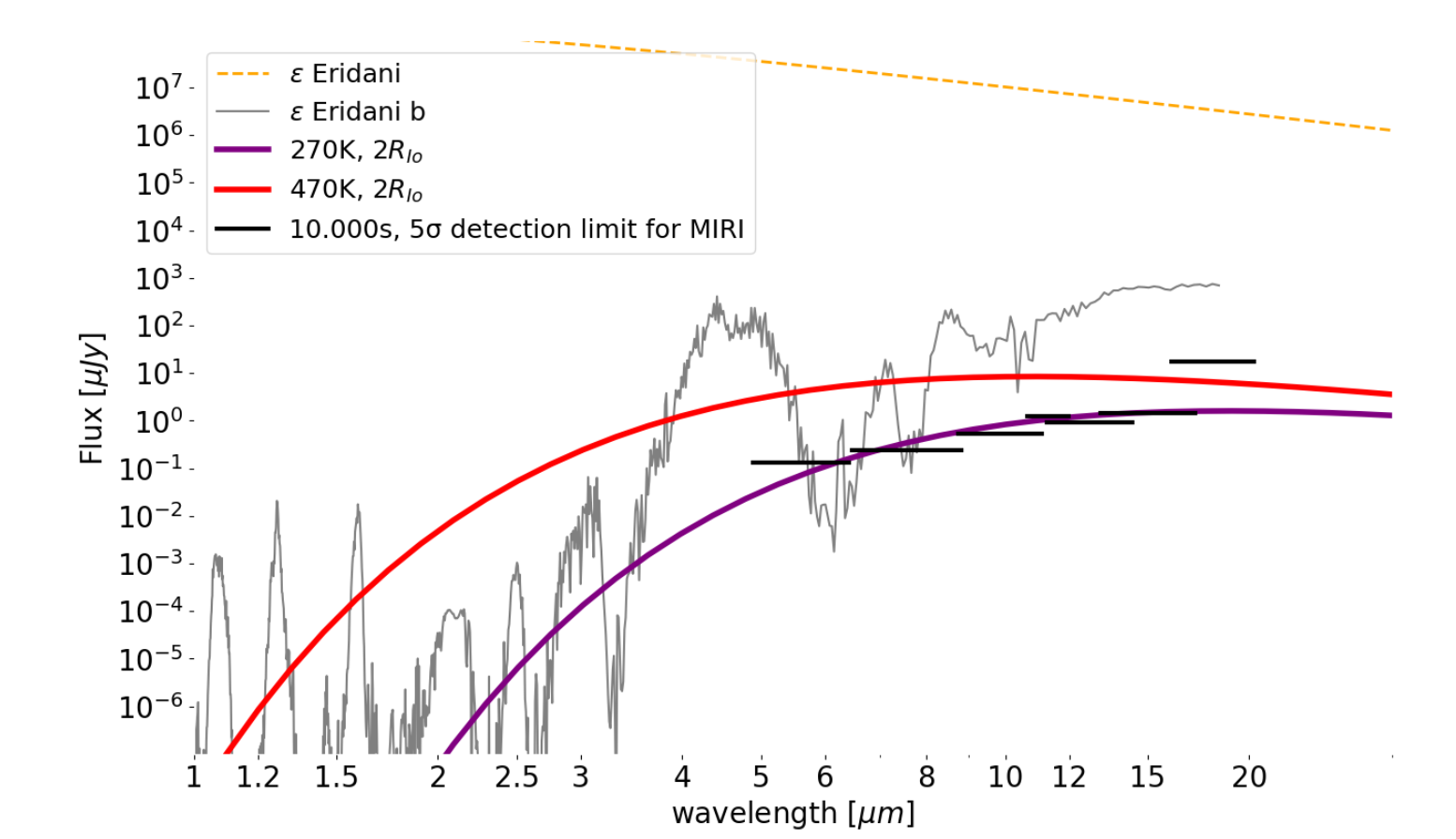
Figure 2: THEM spectrum
A paper by Peters-Limbach and Turner in 2013 titled “On the Direct Imaging of Tidally Heated Exomoons” (THEMs) suggested that, for nearby exoplanet systems with multiple moons in resonance, you can have tidally heated exomoons (THEMs) that can be directly imaged at thermal infrared wavelengths - think Io, the tidally heated moon of Jupiter with its sulphur volcanoes.
Building on the original paper, Elina Kleisioti wrote her PhD thesis on investigating the tidal heating properties of exomoons using more realistic models of the internal structure and heat flow within them.
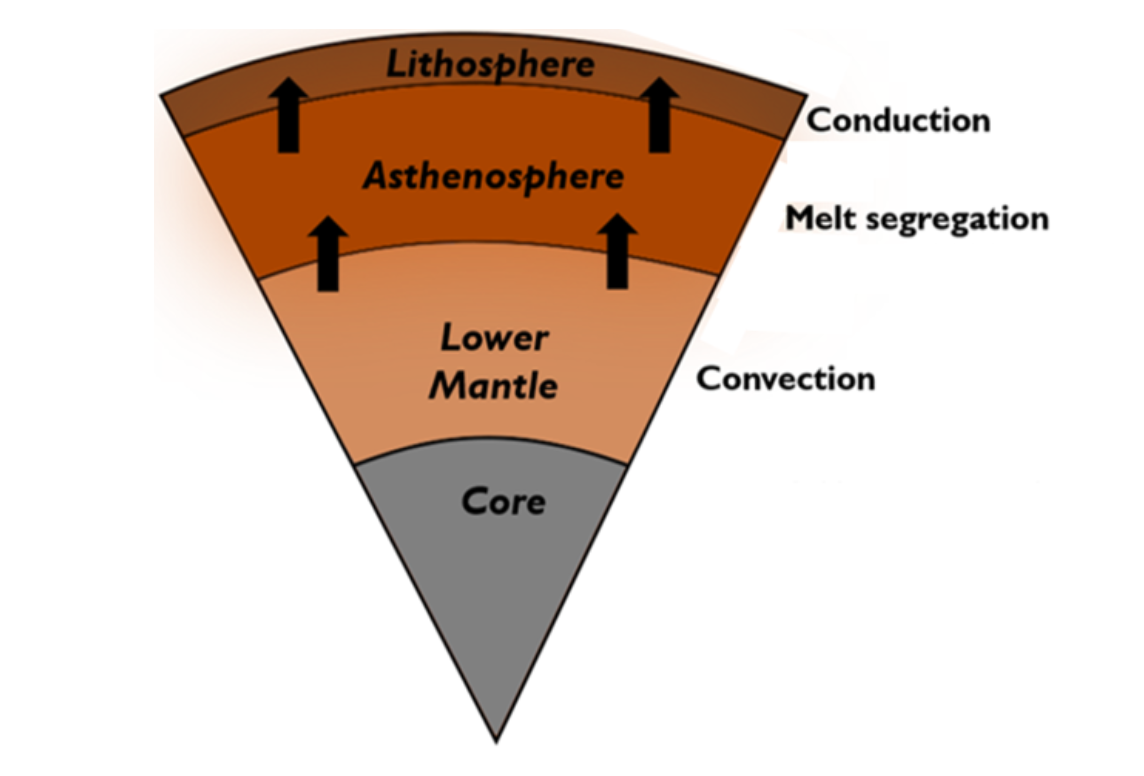
Figure 3: Moon internal model
In order to see the thermal emission from a THEM, the exoplanet system has to be very close to the Solar system, and you also need to make sure that the gas giant exoplanet that the exomoon is orbiting around has cooled off: it’s entirely possible that for a gigayear old system, the exoplanet can be fainter than the tidally heated exomoon at some wavelengths.
Since multiple moons are present around all the gas giant exoplanets in our system, it seems reasonable that there are exomoons elsewhere in the Universe.
We then chose a suitably nearby exoplanet that was orbiting far enough from its parent star that we had a chance of separating the light from the exoplanet/moon system, and ϵ Eridani fits the bill quite nicely. Elina carried out a study for what a THEM around this exoplanet would look like (Kleisioti et al. 2023).
Elina worked together with then Masters studen Quirijn van Woerkom to look at the spectroastrometric detectability of nearby Solar System-like exomoons (Woerkom & Kleisioti 2024). By using a spectrograph they showed that an additional astrometric shift should be possible to detect.
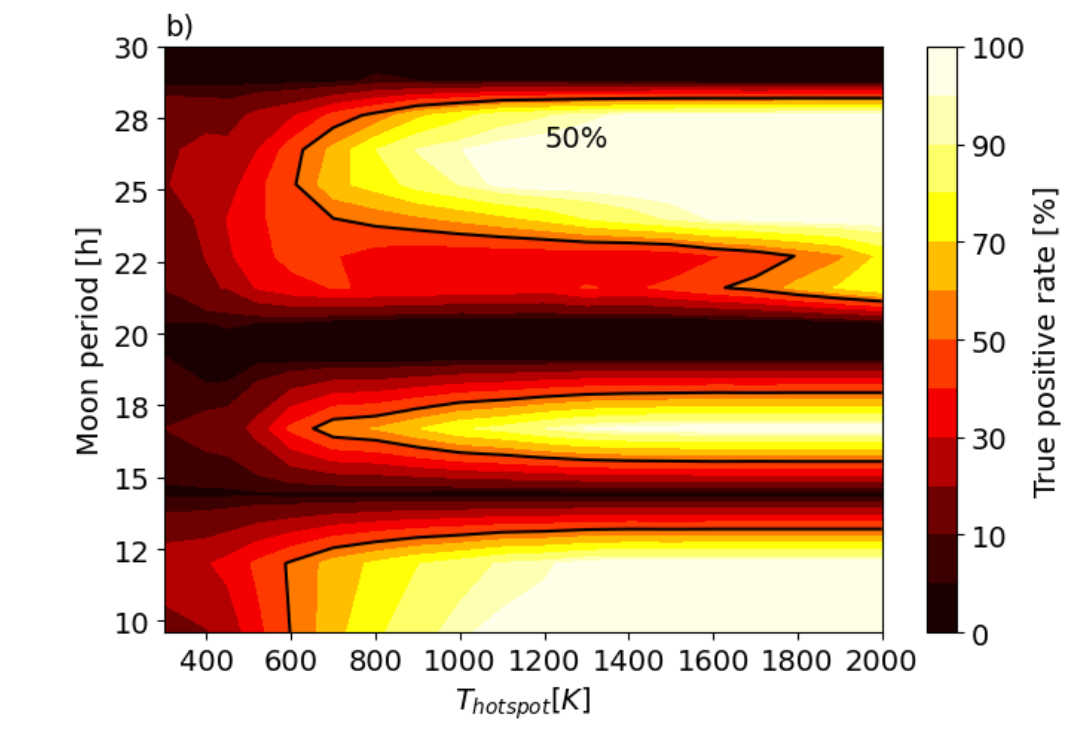
Figure 4: Detection map for RV exomoons
THEMs have to be close to their parent exoplanet in order to have strong tidal heating, and there is a non-negligible probability that the exomoon might transit the exoplanet, providing distinctive eclipses that could be seen by photometric monitoring of the exoplanet…. but then Elina pointed out that we don’t need to have the exomoon transit at all! Instead, if there is an active volcano on the tidally locked side of the exomoon facing the exoplanet, then the volcano appearing and disappearing on modestly inclined orbits provides an additional detection opportunity for exomoons (Kleisioti et al. 2024).
Radial Velocity of Beta Pic b
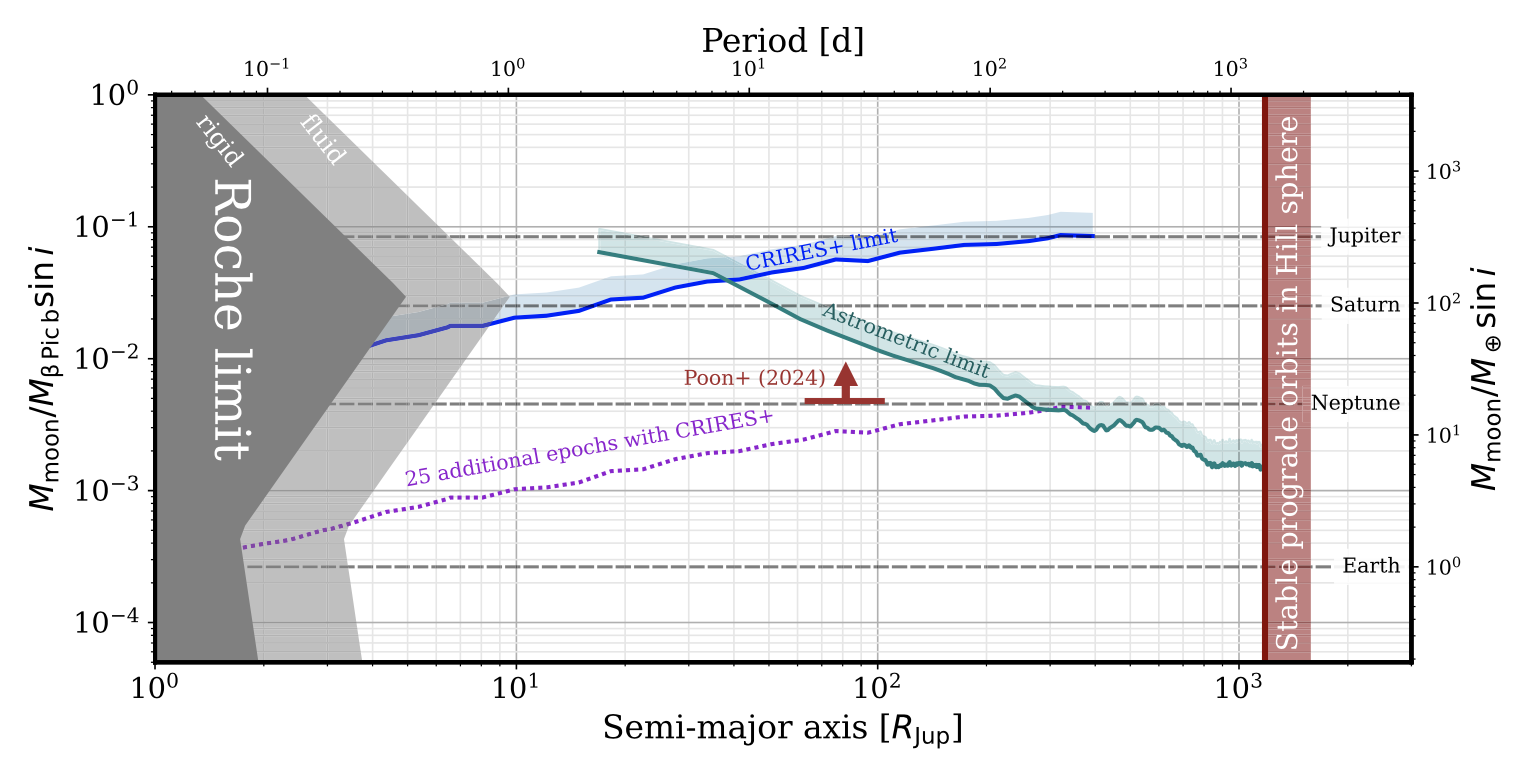
Figure 5: Upper limits in Beta Pic b Hill sphere
We took 11 epochs of radial veloctiy measurements of the planet Beta Pic b and performed a periodogram analysis on the resulting time series to provide the best upper limits on the presence of ecomoons around the planet to date. Together with astrometric limits from our coauthors, these rule out anything larger than two Saturns, a good start for finding exomoons around gas giant exomoons (Kenworthy et al. 2026).
Exorings
J1407b
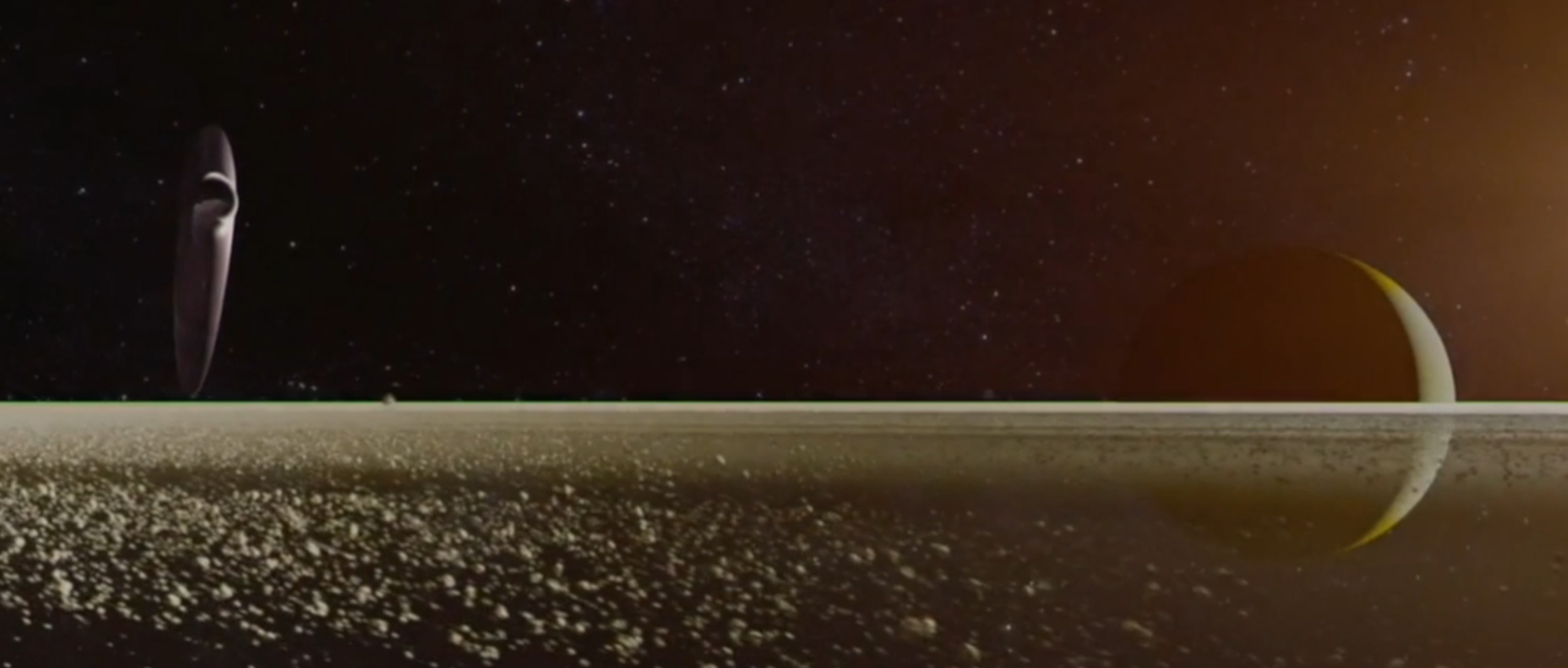
Figure 6: From the COSMOS tv-series
J1407 is a nearby young star that underwent a complex series of eclipses that lasted for almost two months in 2007. Our best explanation is that an (as yet) unseen massive substellar companion with a giant ring system passed in front of the star, causing the eclipse (Kenworthy et al. 2015). We haven’t seen another eclipse towards J1407 (or its full name, 1SWASP J140747.93-394542.6), but data from the ALMA telescope array has detected what might be the dust making up the rings themselves.
We now give a brief history of what we’ve done since the discovery was announced in 2012.
Mark Pecaut, a then graduate student under the supervision of Eric Mamajek at the University of Rochester, discovered the unusual light curve towards the end of 2011. Mark was looking at the light curves of young stars as part of his thesis research. It is difficult to determine the ages of most stars, so several different pieces of evidence are needed to confirm a young star. Looking through the public light curve database of the SuperWASP collaboration, he found 1SWASP J140747.93-394542.6, a star almost the same mass as the Sun, with a light curve that showed a 3% variability that repeated every 3.2 days, almost certianly due to fainter star spots on the surface of the star rotating in and out of view as the star rotated.
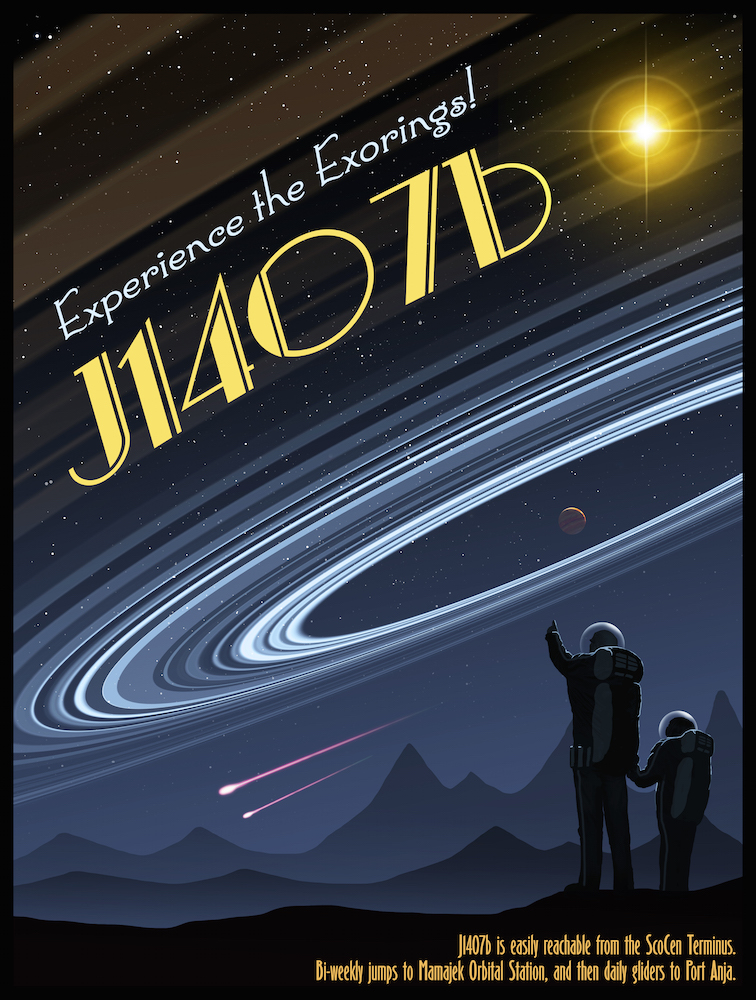
Figure 7: J1407b Travel Poster / M. Garlick
J1407 showed a very long lasting eclipse event from April through May 2007, where the star’s changed brightness on a nightly basis, sometimes as much as 95% of the flux was blocked by something moving in front of the star. The discovery paper (Mamajek et al. 2012) contained a simple model including four large rings about 0.6 au in diameter surrounding an unseen substellar companion, called J1407b, which orbited around the parent star.
Follow up observations were carried out to try and detect J1407b, which must be several tens of Jupiters in mass in order to keep such a large ring system held together and not ripped apart by the gravity of the star. These included looking for another eclipse in other photometric data (no other eclipses were found), looking for the reflex motion of the star as the gravity of the unseen companion tugged on it (the star is young and is very active, preventing the method from being sensitive enough), and directly detecting the thermal glow of the companion itself (no - even with the largest telescopes and an optical trick called sparse aperture masking we did not see anything).
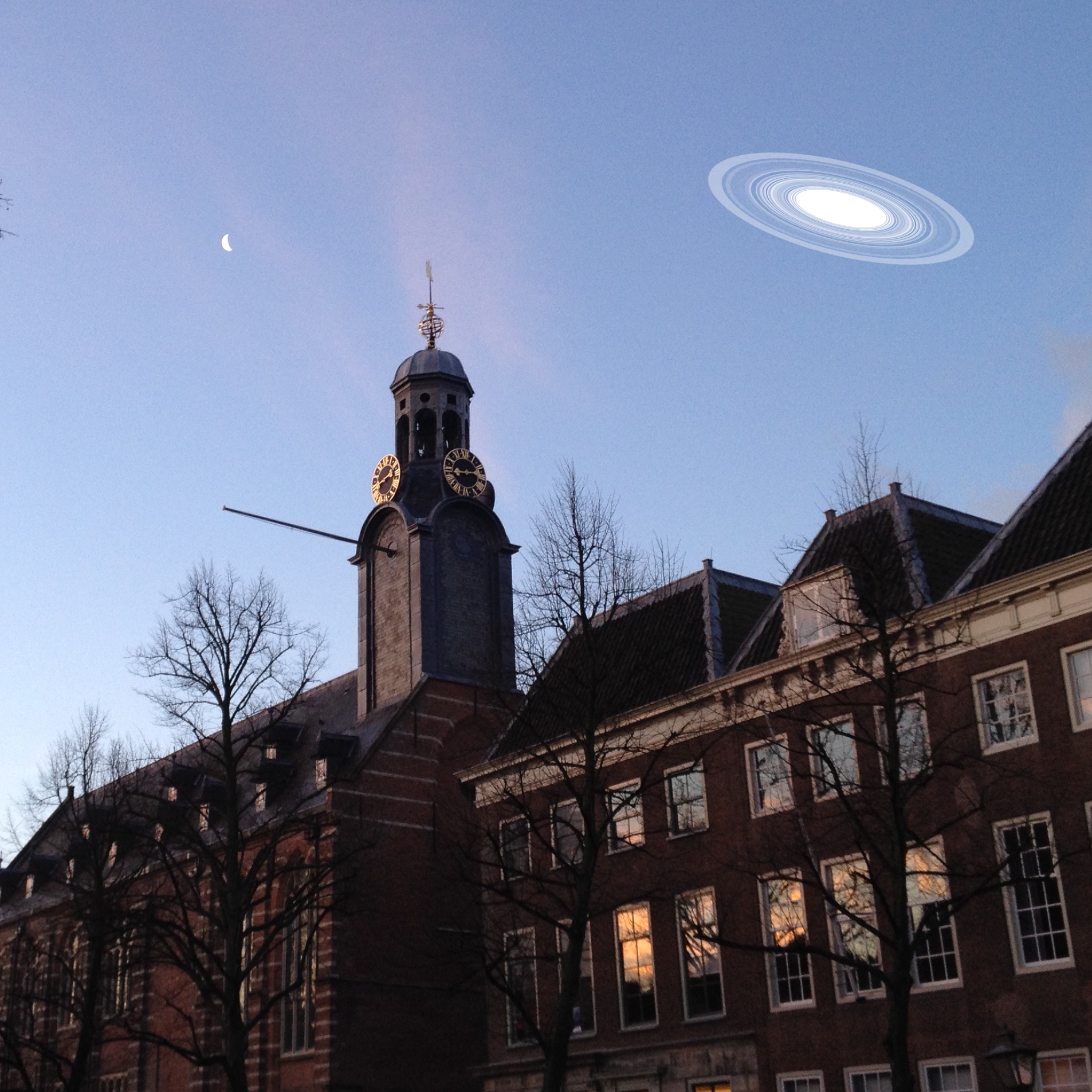
Figure 8: J1407b over academiegebouw / MAK
All these non-detections were still useful, since they allowed us to rule out possible orbits and masses for J1407b, detailed in Kenworthy et al. (2015).
One interesting conclusion we had was that there were no circular orbits for J1407b since we needed to explain why the ring system seemed to be either very big or moving very fast in front of the star, implying that it was in an orbit close to the star. This presented one big problem: our ring system seemed to now be very large indeed, so large that the rings would spill away from J1407b and fall towards the star. Putting J1407b on an elliptical orbit seemed to make the problem even worse.
This inspired Steven Reider to simulate a ring system around a planet that itself was in an elliptical orbit around the star J1407 (Rieder et al. 2016). The new trick was one of a simple spin - if the rings were added so that they span around J1407b in the same direction that the planet orbited around the star (called prograde motion) then the rings fell apart within a few orbits when the planet passed close to the star.
However, if the rings were spinning in the opposite direction (a retrograde motion) then the rings held together for a much longer time, so much so that we could find possible masses for J1407b and orbital periods that would work!
Even if these orbits worked, then another problem presented itself, in that the rings were tilted with respect to the orbital plane of the planet. Most planets rotate, and the centripetal force generated by this rotation causes the planets to bulge out along their equators, distorting them from ideal spheres into oblate spheroids (M&M or Smarties if you like candy/sweeties). This deviation from an ideal sphere means that any ring system orbiting around the planet will tend to align with the plane of the equator, as is the case with Saturn. Since J1407b is younger and more massive than Jupiter, the bulge around the equator is proportionally much bigger, marshalling the rings into this plane.
The rings of J1407b are about 200 times larger than Saturn’s rings, and for the rings a long way away from the planet, the tidal forces of the star J1407 will force them down into the orbital plane of J1407b, some 20 degrees away. The rings should no longer be flat, but have a large systematic warp to them, as calculated in Zanazzi et al. (2017).
Photographs of the night sky have been taken for over a century, and one of the largest collections is at Harvard University. These photographic plates are being scanned in digitally and published onto the internet through the DASCH project. The process is slow and time consuming, especially as you work towards the Galactic plane, where there are far more stars crowded together and disentangling the signals is challenging, but they reached the location in the Galaxy where J1407 is located around 2017. This enabled the baseline for the J1407 lightcurve to be extended back to the 1900’s, but still no eclipses were detected. The coverage of the photographic plates from DASCH were combined with others from Sonneborg and other more recent all sky surveys that looked towards J1407, but still a null result (Mentel et al. 2018).
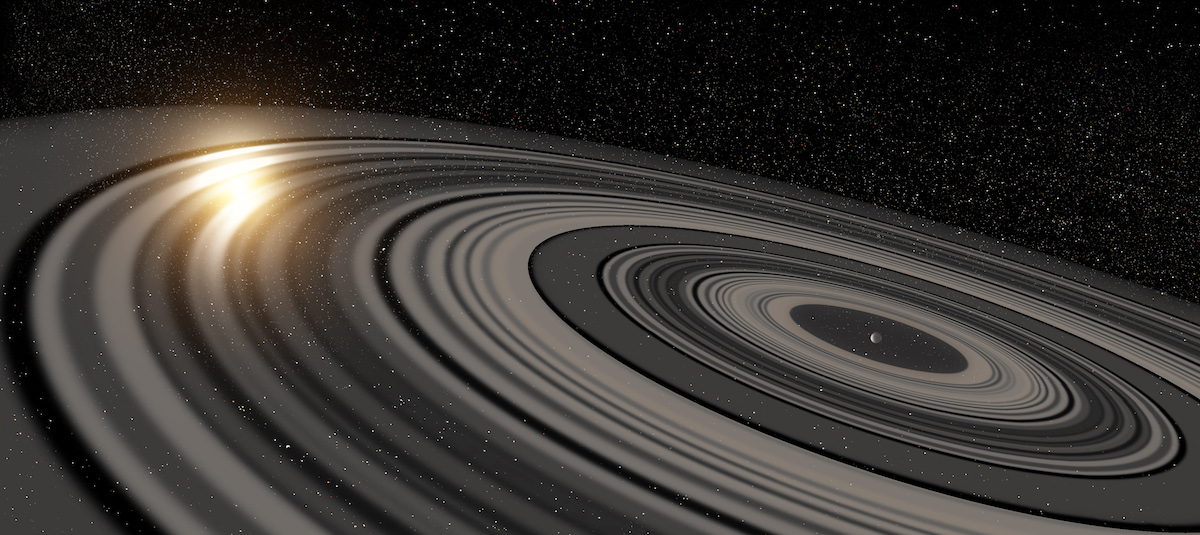
Figure 9: J1407b / R. Miller
Meanwhile, the star is being observed every clear night by the dedicated observers of the AAVSO. They watch J1407 for when the next eclipse will start. The constraints they provide rule out successively more obital periods, leaving J1407b with fewer orbital periods to hide in.
If the planet J1407b could not be detected, then how about looking for the rings directly?
The rings are probably made of small rock or icy particles, ranging from one micron in size up to rocks and boulders. The surface area of the dust in the rings is vast, so much so that they radiate thermal energy at millimetere wavelengths that can be detected with radio telescopes on the Earth. The most sensitive sub-millimetre telescope is the Atacama Large Millimetre Array (ALMA) in the Atacama desert in Chile. We were able to get observing time on this array of telescopes in the Summer of 2018, and to our surprise we detected a sub-mm source with the brightness we predicted for J1407b’s rings (Kenworthy et al. 2020).
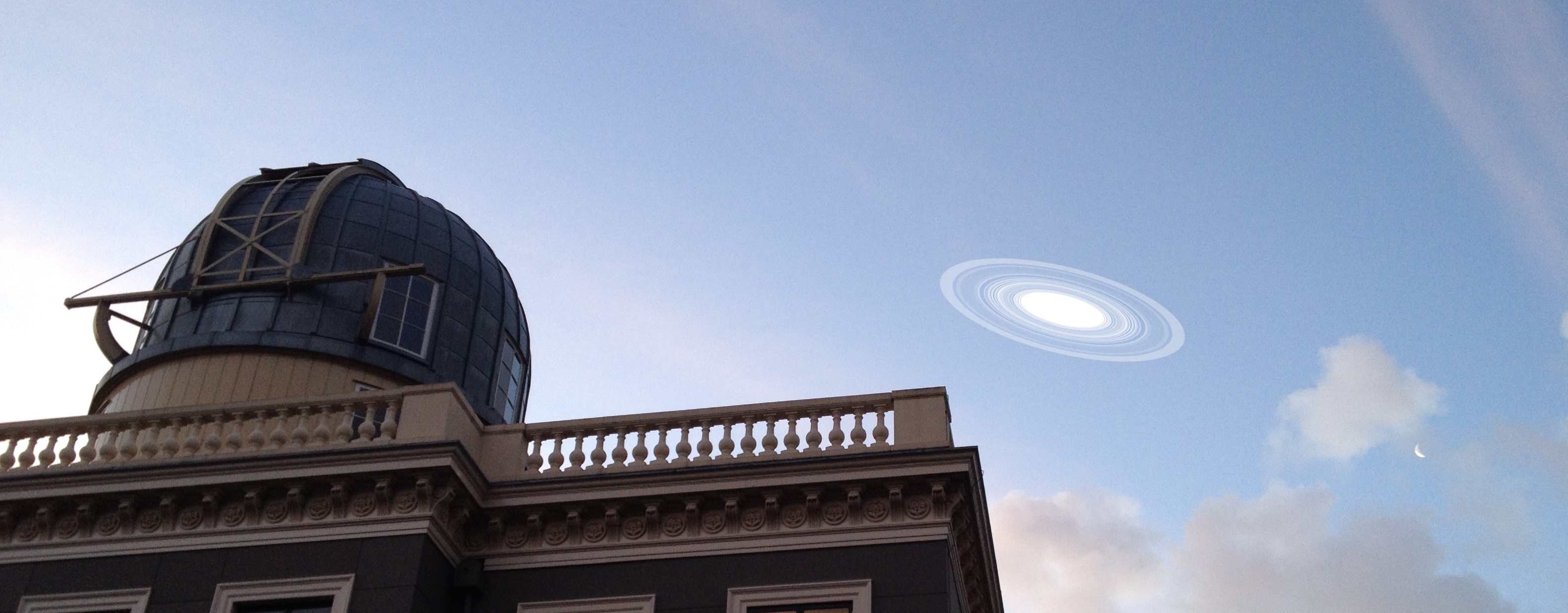
Figure 10: Rings over Old Observatory / MAK
After our initial joy, we then became confused again - because the ALMA source wasn’t exactly in the same position as the location of the star. At these very long wavelengths, the star J1407 is not visible in ALMA, so we had to calculated the expected location of the star and compare it to the ALMA source. If the source is the same physical object that caused the eclipse in 2007, we run into a big problem - the source cannot be in a gravitaionally bound orbit around J1407…. but there’s an very unlikely alternative explanation - that the object we called J1407b is floating freely through the Galaxy, and just happened to pass in front of a very young star.
This is very, very, very unlikely to happen, but there’s a first time for everything…. and to confirm this tantalizing idea, we needed another image from the ALMA array. And in 2023, we got our wish granted! Thanks to a successful ALMA application and a suggestion by the ALLEGRO team, we obtained a second ALMA image looking towards J1407 in 2024. Unfortunately, we didn’t see the ALMA source again, despite having the sensitivity to do so (Klaassen et al. 2025).
This does not mean that the rings aren’t there though - looking for the rings in ALMA was always a long shot, because we’d only be able to detect the most massive (and flared) ring models due to the distance of the system. The rings are still there, just not detectable with these ALMA observations. Our best guess for the 2018 detection is that it was a noise spike or some distant transient source. That’s pretty a unsatisfying explanation, but without more data we’re going to leave it at that.
So that is the latest and greatest information about J1407 and the ring system around J1407b. We still think that the eclipse in 2007 was caused by something orbiting J1407, and that one day we will see another eclipse that will confirm the incomplete light curve from 2007. Once we see it, all the geometry of the ring system is solved almost immediately. Until then, we tide ourselves over and patiently wait for a triggering signal from an observer who says “This star has started fading again!”
ASASSN-21js
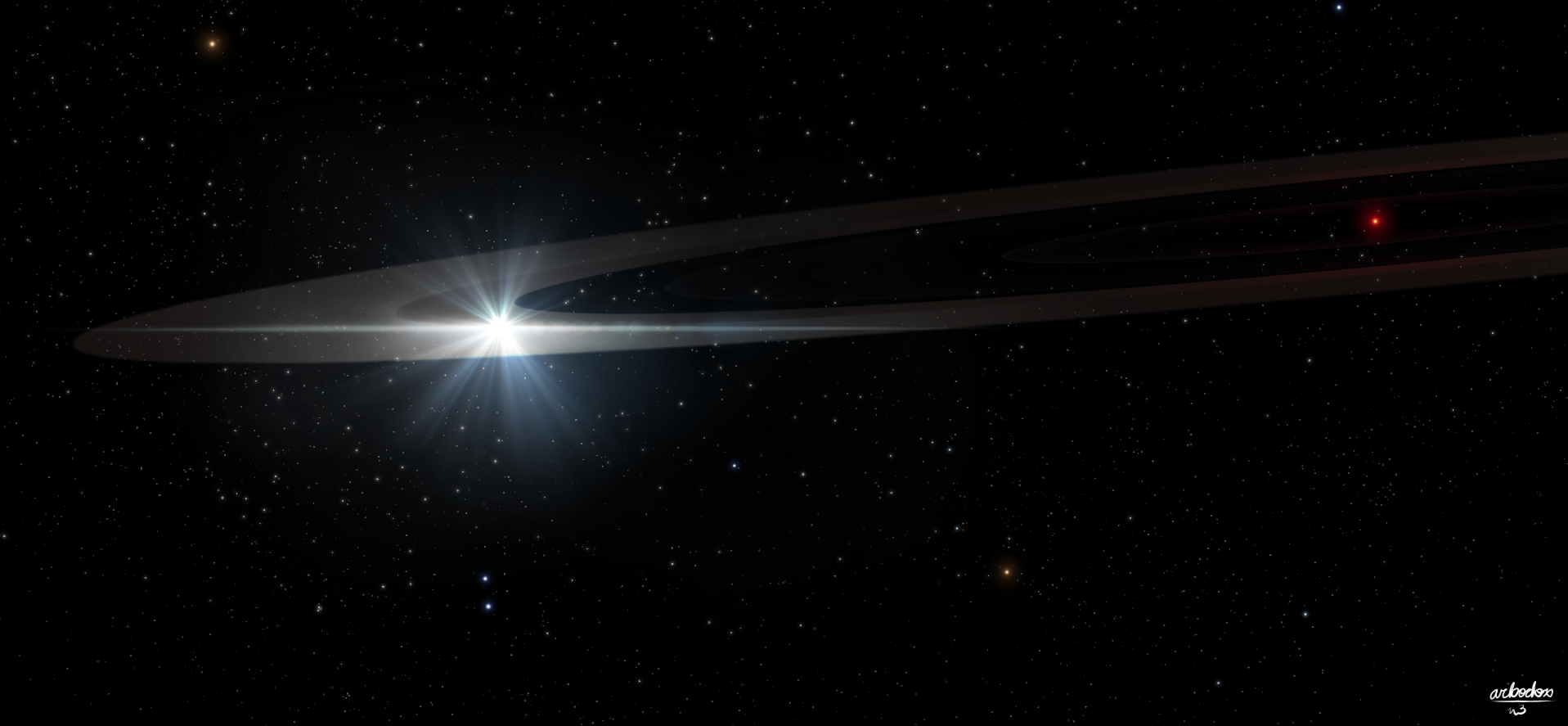
Figure 11: 21js render / K. Ly
I’ve been looking at the light curves that the ASAS-SN survey releases on their transients page - these are light curves that show curious dimmings caused by stellar variability or by something moving in front of the star. One of these light curves, named ASASSN-21js, showed a sudden dimming in 2021, and over the past three years, has faded and then brightened up again. Theo worked on analyzing this light curve with me as a Masters thesis project here in Leiden: after some experimentation, the light curve is exactly matched by a highly tilted and inclined disk with two rings with different transmissions. What’s particularly impressive is that the residuals after the model fit are consistent with noise. This model explains the data almost perfectly.
Using a MCMC fitting package, he was able to determine the confidence intervals on the parameters, with the outermost ring about 1.12 au in radius. Due to the geometry of the eclipse, we only see these two rings - there may be more material interior to this radius, but the star’s motion will not reveal this. What’s more amazing is that the eclipse is still ongoing, finishing only in May 2027!
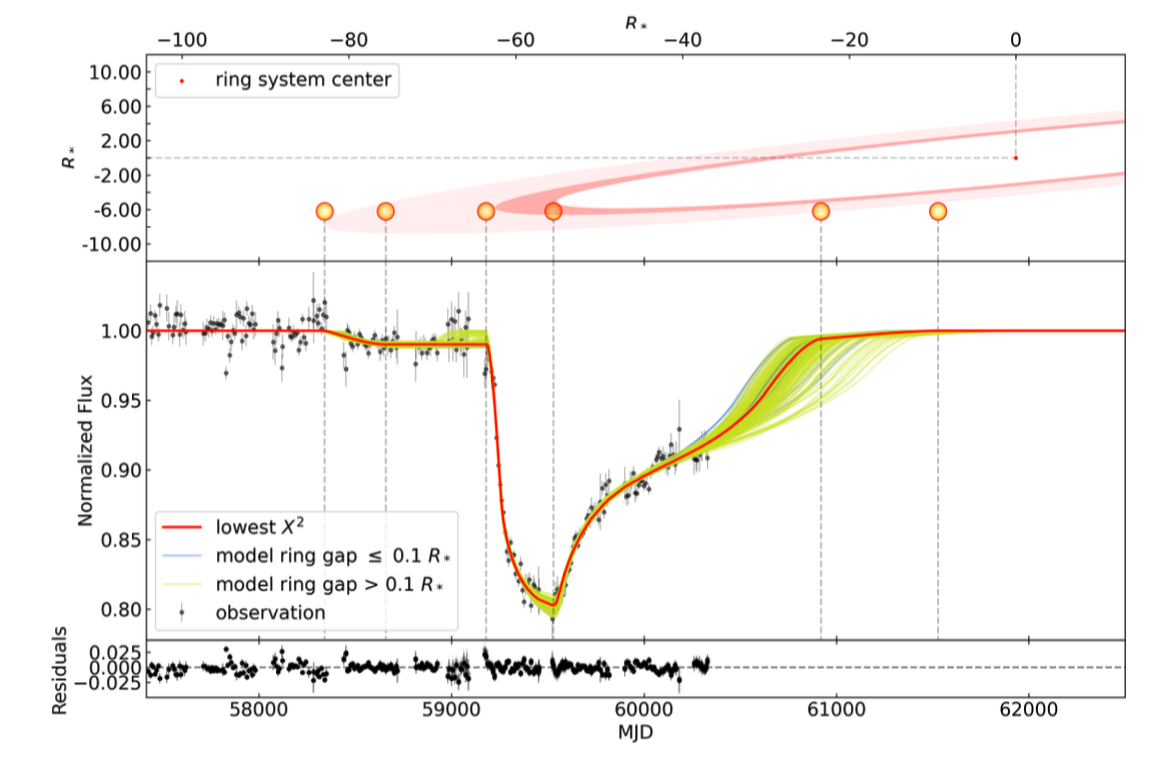
Figure 12: Model fit to ASASSN-21js
Okay, so what are the challenges here? First, the star itself is very large star with a mass of 4.5 times that of the Sun. Those are relatively rare, but are seen long distances across the Galaxy. Second, the transverse velocity is less than one kilometre per second! If this is orbiting around this star, then it’s at a distance of over 13000 au from the star! Deep into Oort Cloud territory. This means that the chance of seeing such an eclipse is tiny, around one in ten thousand for all the solar type stars in the ASAS-SN survey size and duration. That’s an uncomfortable problem and we don’t know the answer as to why we’re seeing this now.
What’s tantalizing is that the MCMC fitting also found solutions with a cleared ring gap between the two main rings (squint at around 59200 days to see this additional gap in the rings). It’s compelling, but not confirmed. There is also multi band data coming in as well, so in future research we can see if the material is sub-micron sized or not. More of these unusual systems are being discovered in ASAS-SN, and with other large survey telescopes coming online soon (think the Vera C. Rubin observatory) many more of these systems might be discovered.
The bRing project
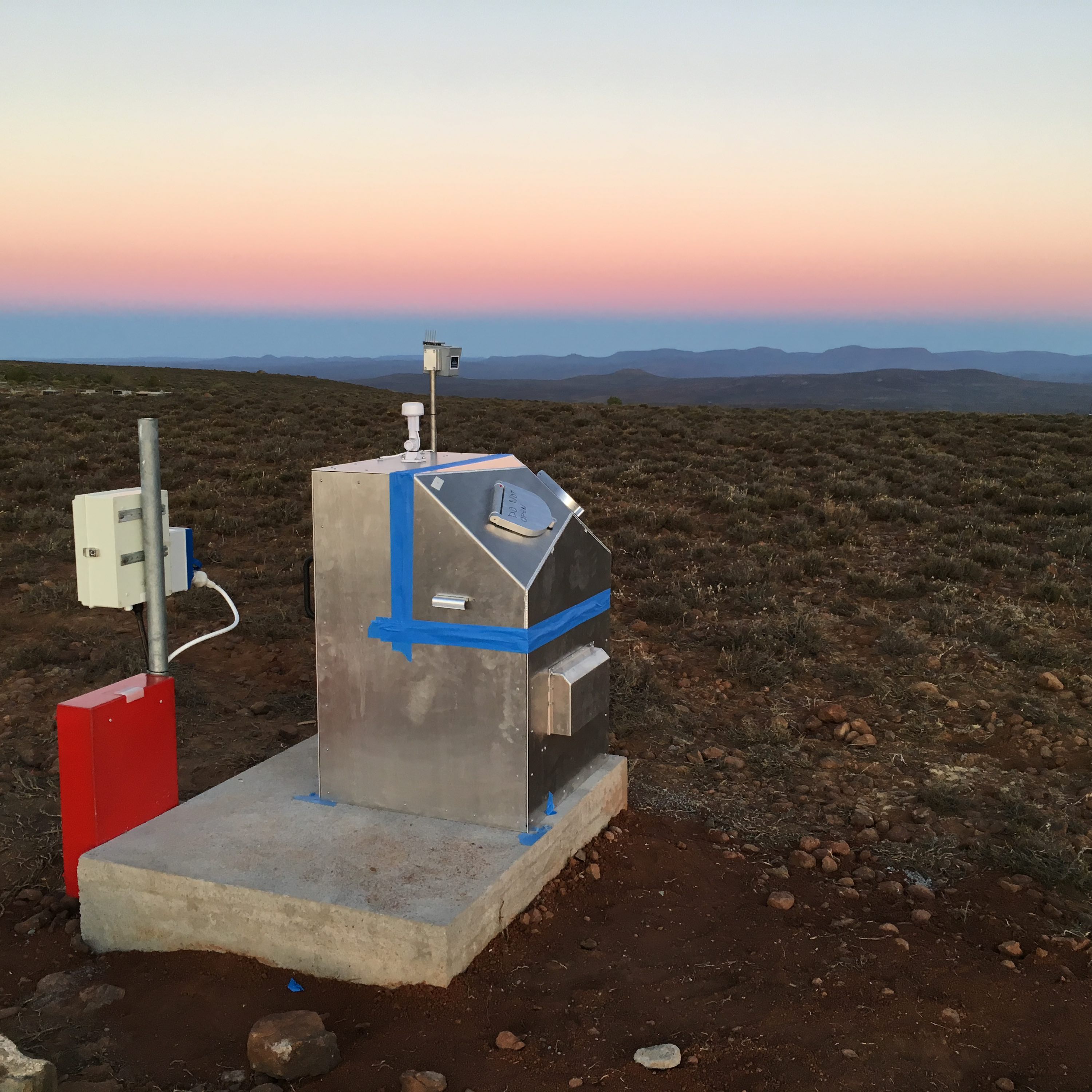
Figure 13: bRing in South Africa / MAK
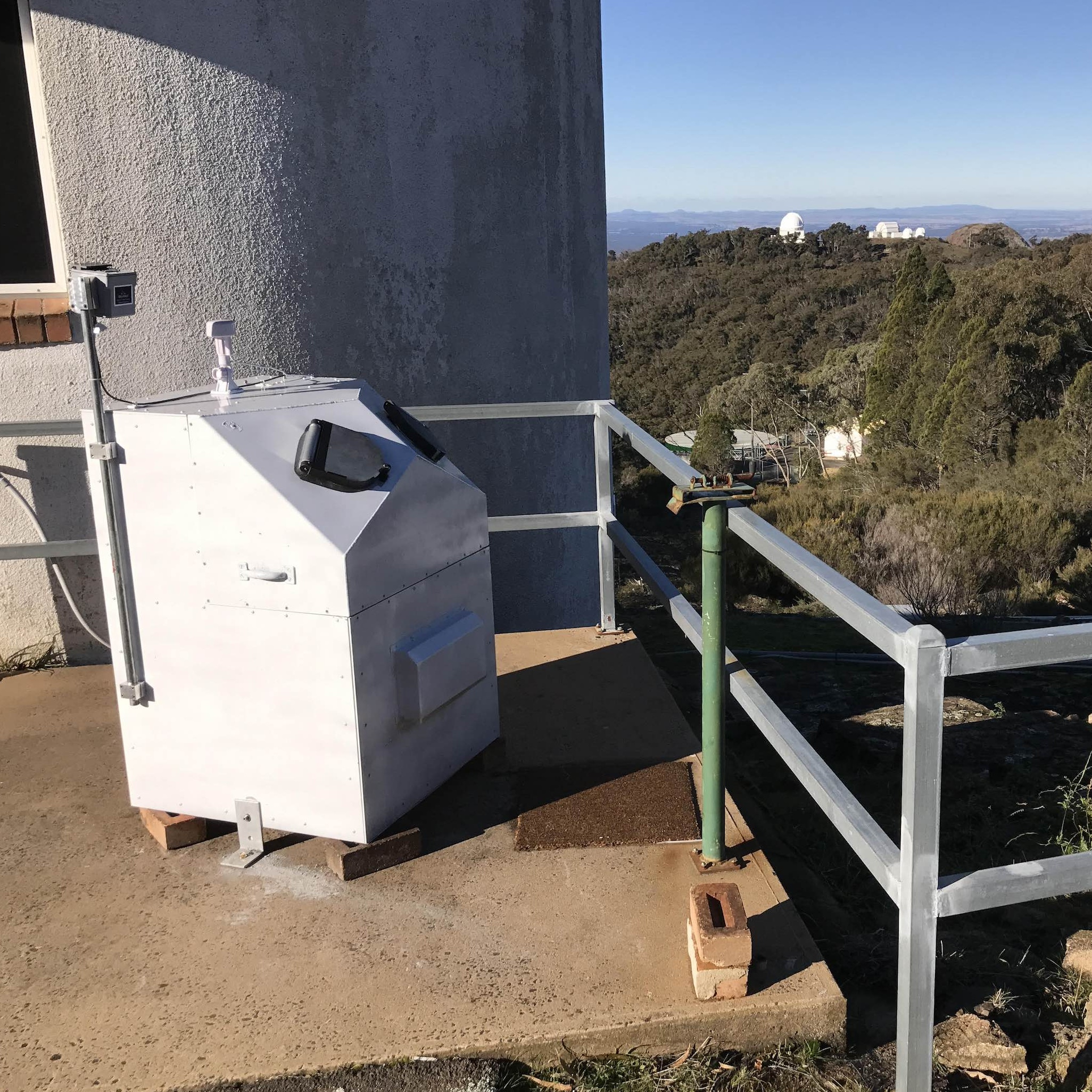
Figure 14: bRing in Australia
In 2017 and the start of 2018, the circumplanetary environment of the gas giant exoplanet Beta Pictoris b crossed in front of the bright young star Beta Pictoris, a naked eye 4th magnitude star in the Southern skies. We wanted to see if any circumplanetary material crossed in front of the star over this 300 day period, and so I started the bRing project.
The Beta Pictoris b ring (bRing) project are two small robotic observatories in South Africa and Australia (Stuik et al. 2017) each one consists of two telephoto lenses with support computers so that we can continuously monitor the path of Beta Pictoris across the Southern skies. The design builds on the heritage gained in Leiden from the MASCARA all sky survey camera units. To get longitudinal coverage, two separate bRing cameras were built (one by Leiden Observatory for South Africa and one by University of Rochester for Australia) and the data is combined with MASCARA South to provide redundant photometric coverage. The photometric precision is 0.5% with 5 minutes of data.
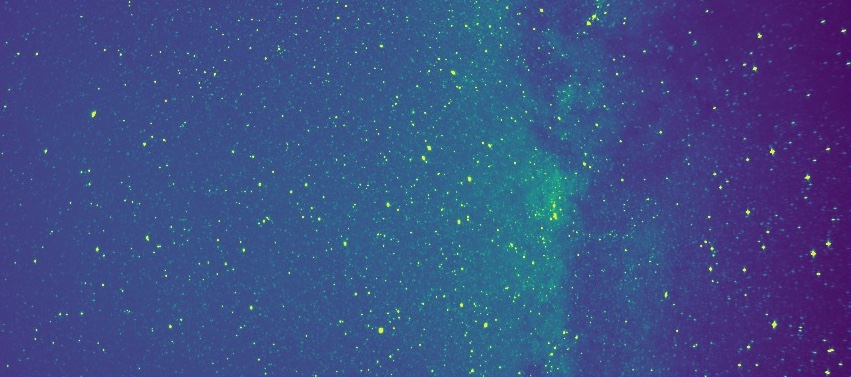
Figure 15: sky image from bRing
The project successfully monitored the Hill sphere transit of Beta Pictoris b and we placed an upper limit to the amount of dust and an absence of rings (Kenworthy et al. 2021).
Several other papers have been produced from the observatories, including the discovery of a transiting exoplanet (Dorval et al. 2020) and a variable star catalog (Mellon et al. 2019).
The South African observatory survived a huge hail storm that took out several other observatories, and the Australian observatory had the power supplies shorted out by ants(!)
Cosmic collisions: ASASSN-21qj
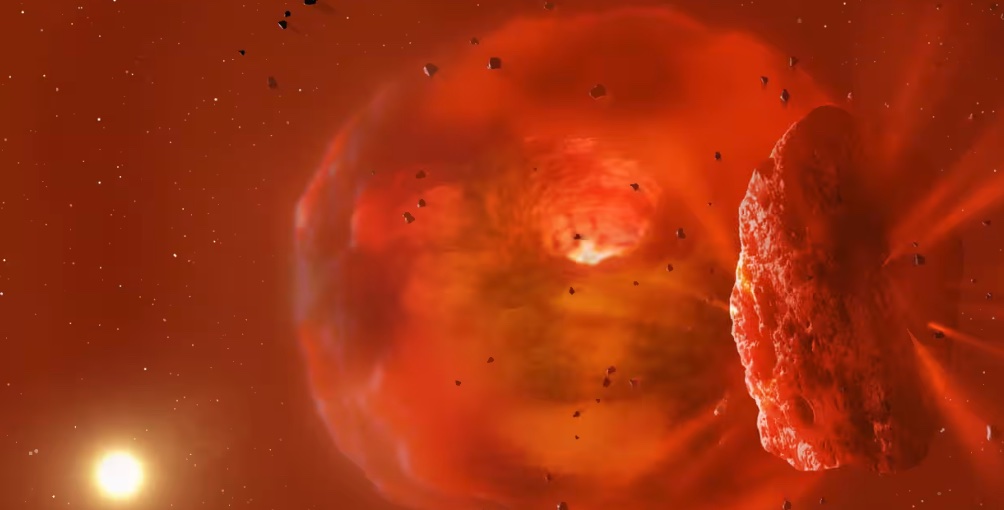
Figure 16: Synestia / M. Garlick
Whilst looking for transiting ring systems in the ASAS-SN survey, one light curve stood out as a good candidate - ASASSN-21qj. Together with Richelle van Capelleveen as part of her Masters project, we investigated whether the light curve we had could be fit with a transiting ring system. I was typically posting on social media about our developing research, and one day Arttu Sainio, an astronomer living in Finland, posted that this star had doubled in brightness in the infrared some 900 days earlier - this could not be a mere coincidence! After much scrambling around and thinking about possible alternatives, we landed on the hypothesis that we were seeing the afterglow of two ice giant mass exoplanets colliding, which would cause the infrared glow, and then about 900 days later the debris cloud passed in front of the star, giving the light curve we were seeing.
Ultimately this was published in Nature (Kenworthy et al. 2023) and suggests that we could see this afterglow with the JWST…. so we applied for (and got) three epochs of observations to see if we could see the synestia, the remnant of the collision that would resemble a giant cloud of silicate gas. Initial examination of the data shows no signal, but we’ll keep working on the data and see what we can see.
Exocomets
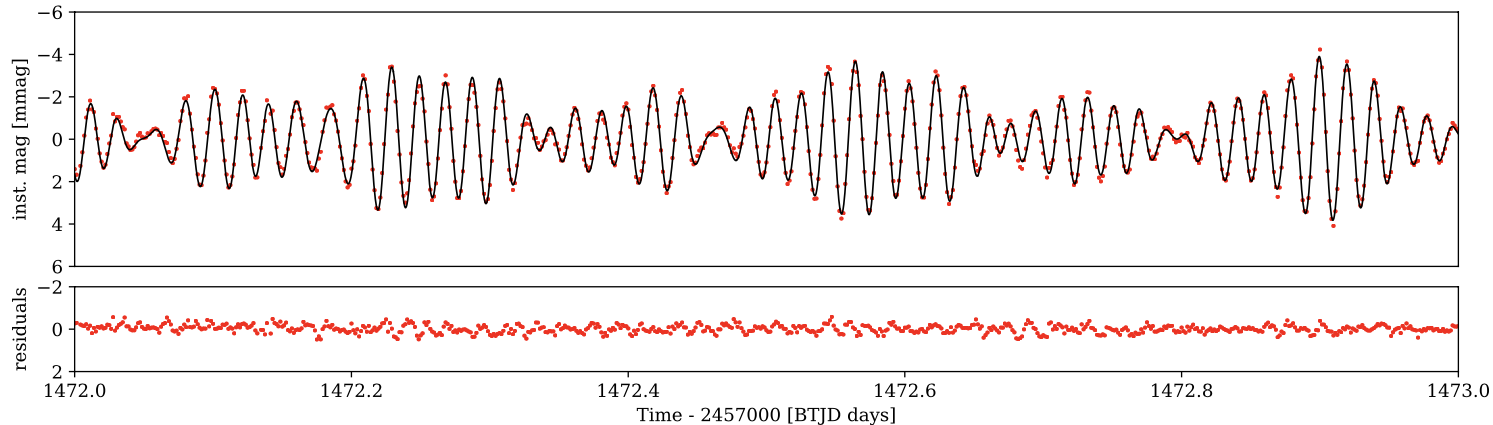
Figure 17: Pulsations seen in Beta Pic’s light curve
Then Masters student Sebastian Zieba was at the University of Innsbruck working with Prof. Konstanze Zwintz, and I was working on Beta Pictoris as part of the bRing project. Sebastian was interested in looking at space satellite data, and he mentioned that TESS had just looked at Beta Pictoris, would that be interesting at all? Of course! So Sebastiaan went off, learned all about TESS, and some time later produced the Beta Pic data.
The star itself is a Delta Scuti pulsator, and shows a family of over thirty separate pulsations on the order of five minutes or so. Fortunately prof. Zwintz is a leading expert on stellar pulsations, so they worked together, removed the pulsations, and sent me the resulting light curve one Saturday morning.
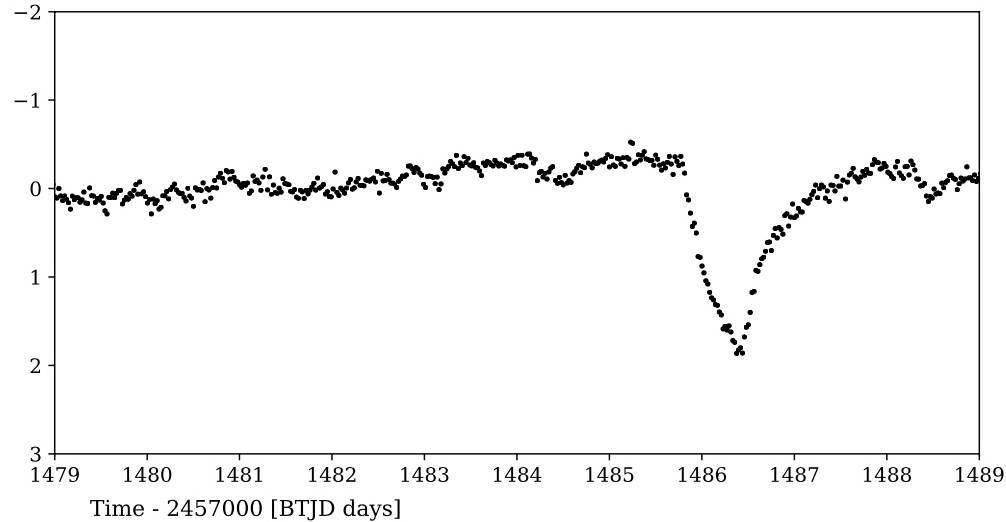
Figure 18: Exocomet transit of Beta Pic
Almost immediately I saw that they had found the transit of an exocomet, which has a distinctive shark’s tooth profile, and I was immediately reminded of the prediction of what such a light curve would look like by Alain Lecavelier des Etangs some two decades earlier. It was pretty amazing to look at the signal, which was as clear and distinct as the predition paper had shown. There then followed one of the fastest “discovery to published paper” timelines I’ve ever been involved in - just over 40 days, if my maths is correct, resulting in Zieba et al. (2019). I’ll probably never get that again in my career….
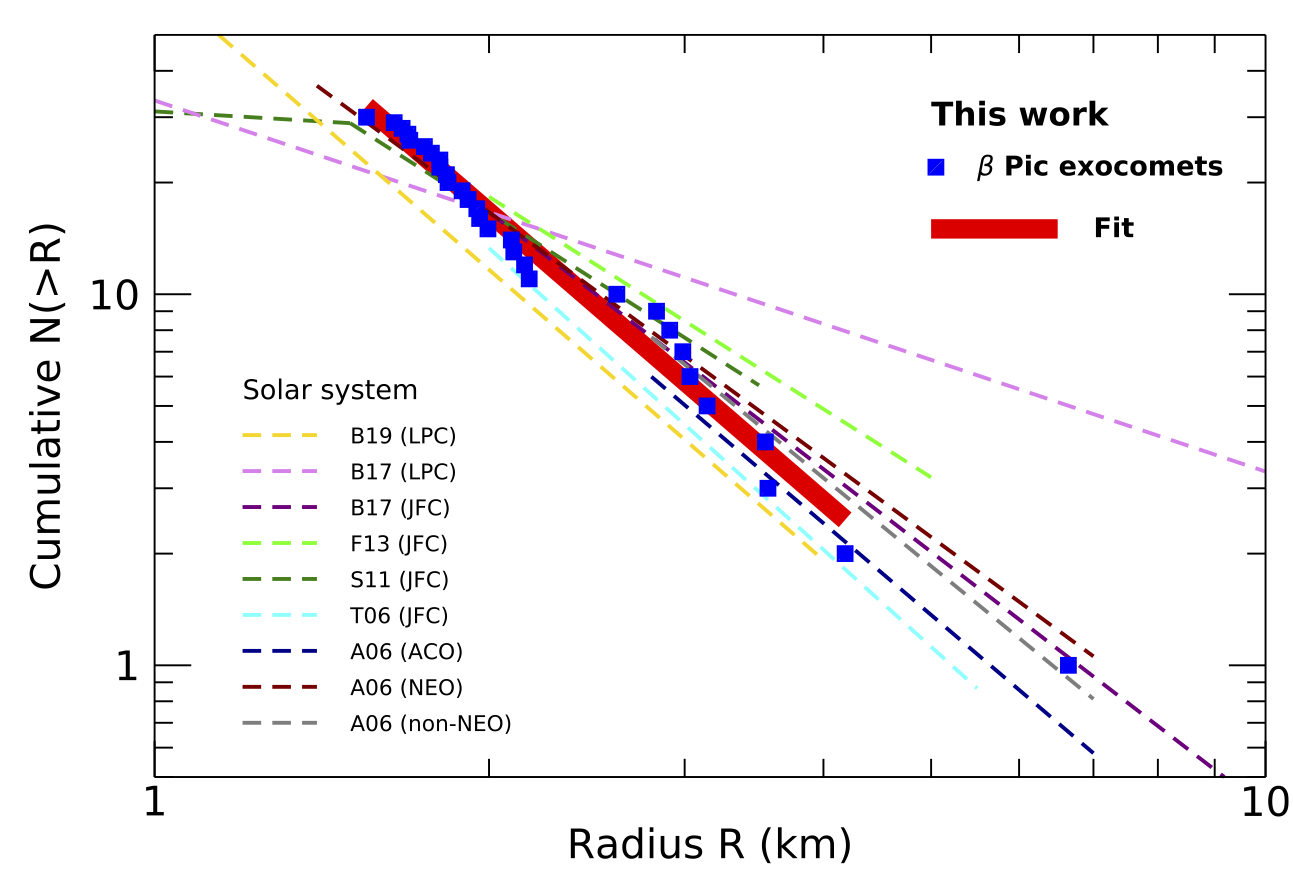
Figure 19: Multiple Beta Pic exocomets
These exocomet signals are small, so require the photometric precision of a space satellite to tease them out. TESS visited Beta Pictoris several times again, and in that new data Lecavelier des Etangs (2022) discovered an additional 27 exocomet transits over a total of 156 days, enabling a power law fit to the size distribution of the exocomets and showing similarities to those in our own Solar system. In 2027 the space mission PLATO will look at Beta Pictoris as part of its LOPS2 field, and will do so for at least two years. We predict over 200 new exocomets will be detected during that mission.
Direct imaging of exoplanets with YSES and WISPIT
My former graduate student Alex Bohn led a survey for directly imaged exoplanets using the VLT instrument SPHERE, called the Young Sun Exoplanet Survey (YSES). It consists of a sample of 72 young stars (around 14 to 17 Myr old) from the Sco-Cen association that were first identified by Eric Mamajek and Mark Pecaut. Instead of deep exposures of 60 to 90 minutes, we take 2 minute images in two filters per star. We then use RDI and PCA with all the other stars in the survey to build a reference PSF for our target star. The survey has resulted in the detection of two planets in the YSES 1 system, and one planet detection (YSES 2b) that was subsequently retracted when we found out it was a distant M dwarf some 2 kiloparsecs behind the foreground star.
Encouraged by our success with the YSES survey, we expanded our parameter search to include all young stars across the sky visible from the VLT, and ended up with a sample of 180 stars covering ages from 2 Myr up to 20 Myr. The Wide Separation Planets in Time (WISPIT) survey is being carried out over several observing periods since 2022, and to date (January 2026) has produced two exoplanet systems.
YSES 1b and 1c
Looking through the first set of second epoch images, Alex discovered our first exoplanet companion, YSES 1b, a 14 Jupiter mass companion around a 1.0 Solar mass star (Bohn et al. 2020), and then whilst taking data to characterise YSES 1b, Alex discovered a more distant companion from YSES 1, and this is a 6 Jupiter mass exoplanet some 320au away from the star (Bohn et al. 2020b).
YSES 2b
The YSES survey announced the discovery of a second directly imaged exoplanet system (Bohn et al. 2021), this time with a 6 Jupiter mass exoplanet with a projected orbit of 115au. What’s interesting is that this was the second discovery when only a third of the stars have been observed for their second epoch observations, suggesting that we may well find more exoplanet systems in the rest of the survey.
2025 update: HOWEVER… sometimes the universe throws you a curveball - after working on characterising the orbit of YSES 2b, we discovered that it is not an exoplanet, but a distant M dwarf star some two kiloparsecs behind YSES 2. The background star has proper motion that looks like Keplerian orbital motion, and only several epochs of observations with the VLT interferometer GRAVITY were able to spot the parallax in the background star.
We break the bad news in Kenworthy et al. (2025).
A circumstellar disk around Wray 15-788
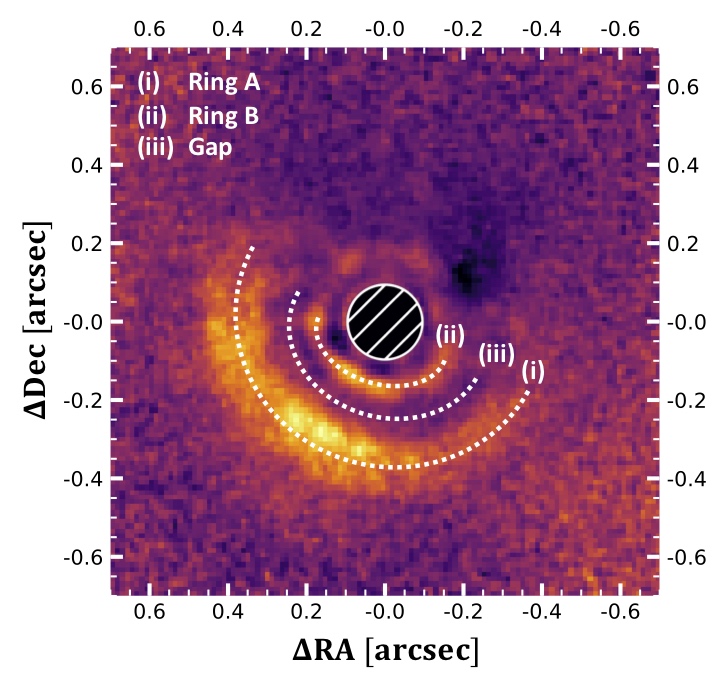
Figure 21: Wray 15-788 disk in polarized light
One of the first discoveries from YSES was a circumstellar disk around the star Wray 15-788 (Bohn et al. 2019), showing detailed circumstellar structure and shadowing from the inner rings onto the outer rings. There are at least two gaps in the disk, and the inner disk is tilted with respect to the outer parts of the disk, such that the outer disks are not completely illuminated by the light of the star. There may well be one or more planets in the gaps in the disk, but these are always challenging to image directly. Deeper observations will reveal the detail and fainter structures, if they are present in the outer regions of the disk. Future observations will constrain the nature of the ring material and the geometry of inner structures closer to the star.
WISPIT 1b and 1c
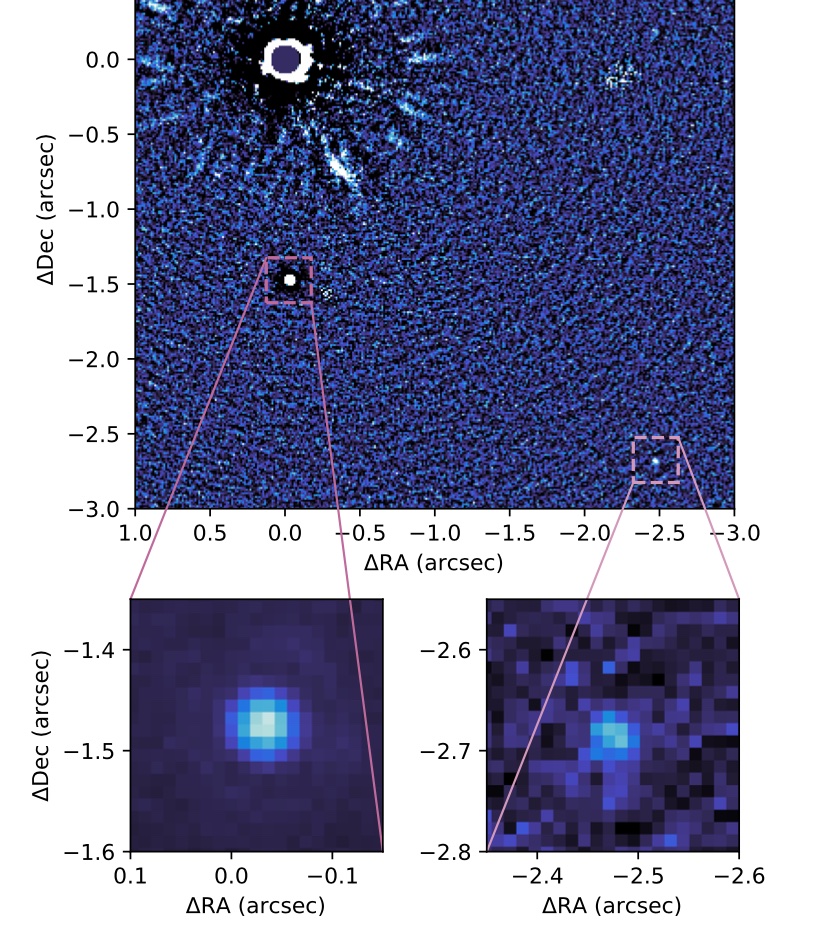
Figure 22: WISPIT 1 b and c
WISPIT 1 is a stellar binary with a primary star of around one solar mass, with two comoving companions identified as gas giant exoplanets (van Capelleveen et al. 2025a). These companions have photometric masses of 10 and 5 Jupiter masses, orbiting at projected distances of 338 and 840 au respectively, presenting a challenge for formation mechanisms as to how these planets ended up so far from their parent stars. Maybe something to do with the stellar binary? Or some other process that’s switched on in this particular system?
Future observations will narrow down their origin, and identify what molecules there are in the system. It is interesting to note that this is another multi-planet system.
WISPIT 2b and 2c
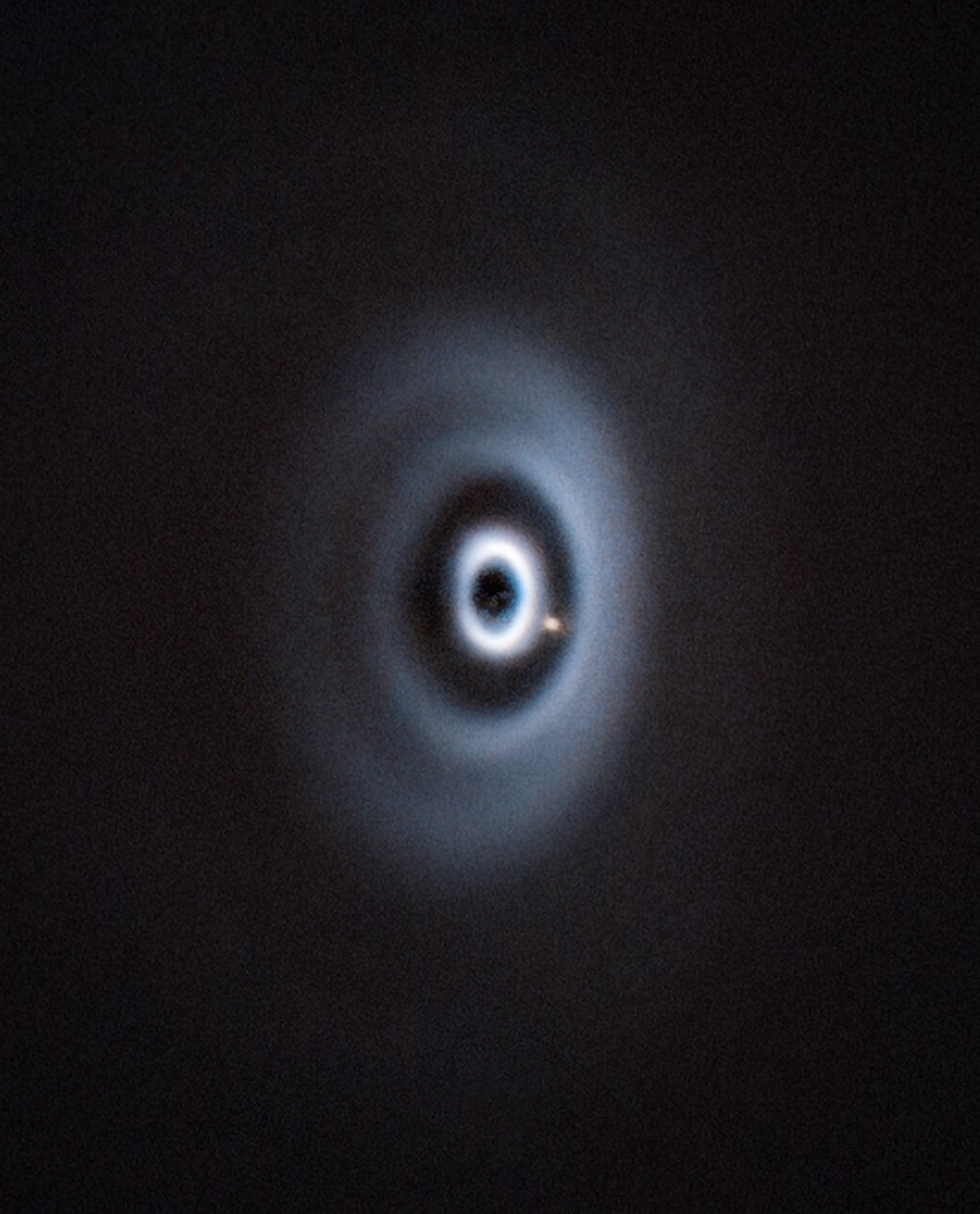
Figure 23: WISPIT 2 disk
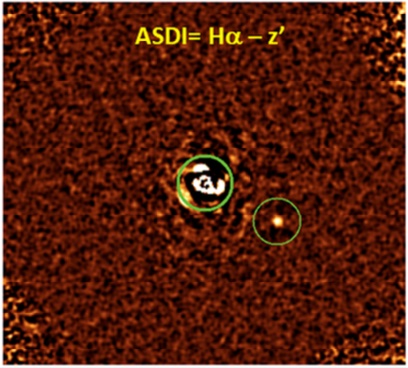
Figure 24: WISPIT 2 b in Hydrogen alpha light
We detected a spectacular circumstellar disk which has several cleared rings within it. The widest ring has a protoplanet of about 5 Jupiter masses (van Capelleveen et al. 2025b), and is detected as a point source in the optical Hydrogen alpha line indicating that is is undergoing acitve accretion within this cavity (Close et al. 2025).
The two papers detail the orbital dynamics of the planet, which is at about 56 au from the central star with a photometric mass of 5 Jupiter masses. Orbital motion is seen over two years of observations, confirming it is comoving with the star, and the astrometry is consistent with Keplerian orbital motion within the dust gap opened up by the planet. Imaging from Hydrogen alpha in the optical through to L’ band at 3.6 microns confirm that the planet is accreting gas, and has a thermal spectral energy distribution with a young planet consistent with the age of the disk and star.
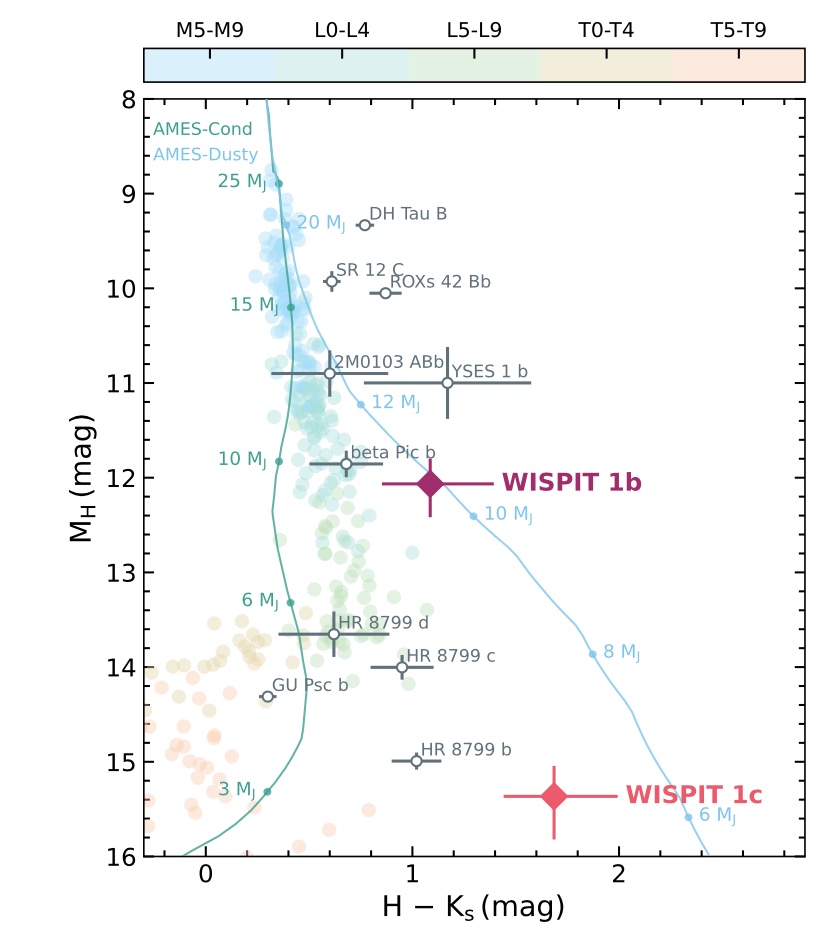
Figure 25: CMD for WISPIT exoplanets
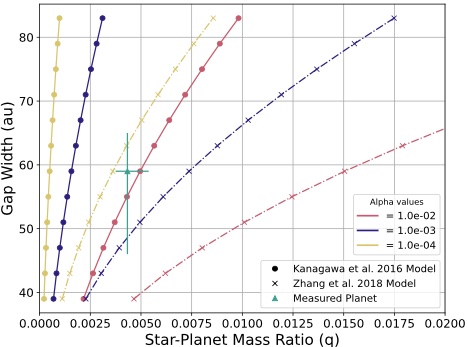
Figure 26: Width of measured gap by WISPIT 2 b
Follow up observations with the GRAVITY+ interferometer confirms that there is a second planet, WISPIT 2c, at around 16 au from the star with a mass of around 10 Juptiers (Lawlor et al. 2026), and to add even more intrigue, the star has been resolved to be a spectroscopic binary with a lower mass secondary on a 4 day orbit around the one solar mass primary star (Burgy et al. 2026).
Since the star is close to the celestial equator of the Earth, it is visible from all the large observatories. The width of the gap is an important test of planet formation theories.
Pinhole cameras
I’ve been using the SolarCan pinhole cameras since 2020 to take long exposure images in and around Leiden. These are aluminium cans that are delivered with photographic paper wrapped around the inside surface of the can, facing a pre-drilled pinhole halfway down the side of the can. You install them on a suitable post with two tie wraps and then remove the label covering the pinhole, starting the exposure.
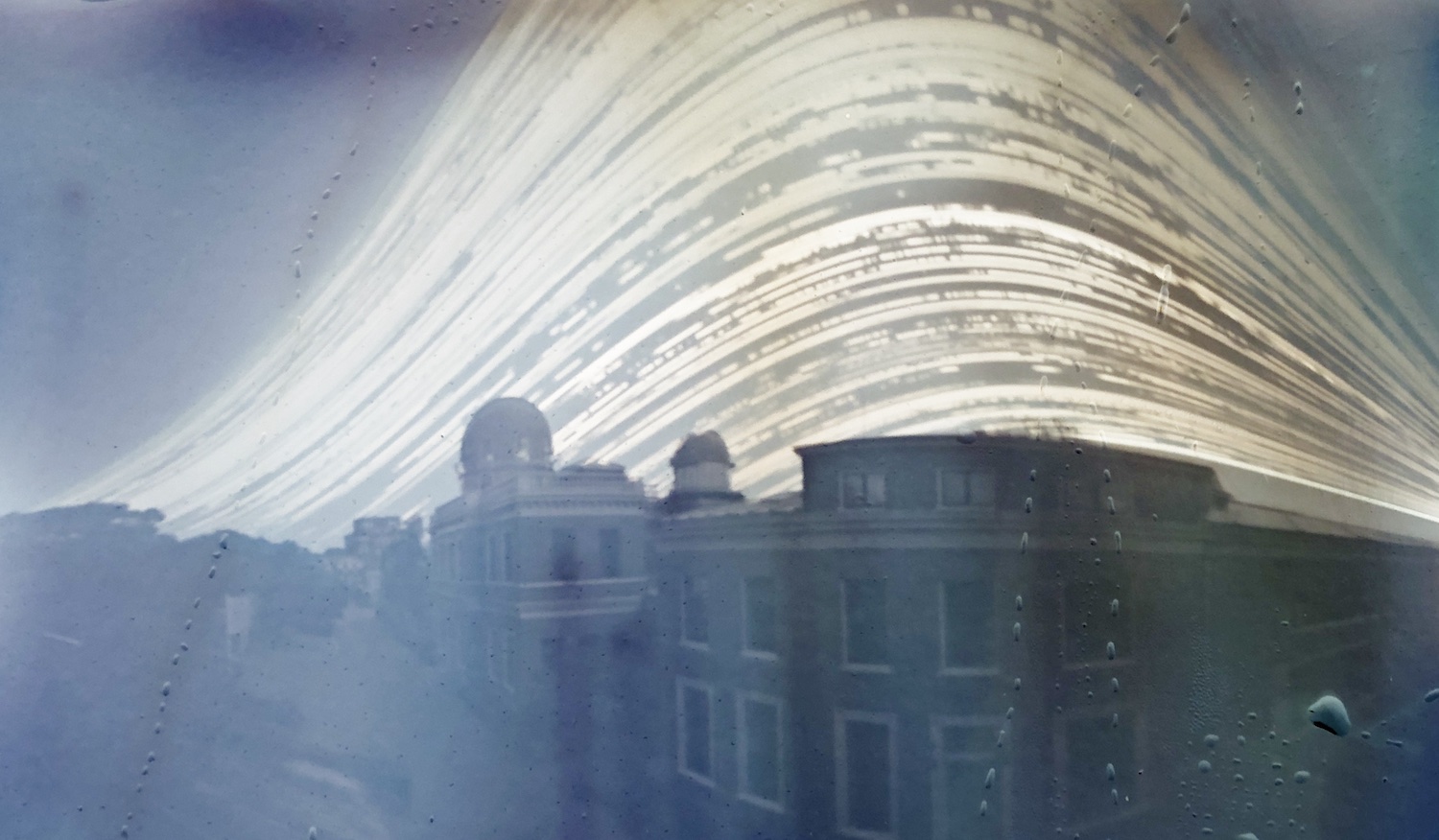
Figure 27: Pinhole over 6 months
The results can be amazing, and I’m especially proud of this photo of the Old Observatory buildings in downtown Leiden, here in the Netherlands. This image is from June 2022 to mid-December 2022, covering the Sun moving from the northernmost declination to its southernmost point on the celestial sphere. Each white line is the path of the Sun as seen by the pinhole camera, with the dark dashes due to cloud covering the Sun. The topmost track is in Summer, with Autumn paths making up the majority of the image, before the Winter Sun is moving behind the Old Observatory domes.
The illumination of the Sun on the buildings reminds me of a foggy day - there are no shadows here, but all the paint of the building windows can be clearly seen. Temporary structures and people fade to nothingness and you are left with only the buildings and trees, the sway of their branches smearing out into invisibility. For me it’s a reminder of our impermanence.
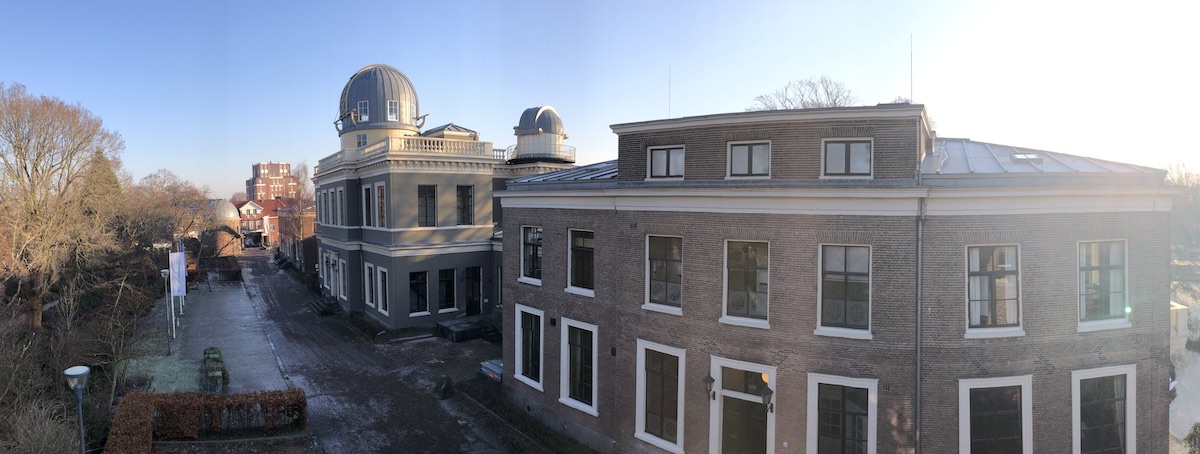
Figure 28: View of Old observatory
There are a few tips I have for anyone using a SolarCam: For higher latitudes, the can will not quite catch the Sun near the Solstices (the highest and lowest points of the Sun on the Celestial sphere) so the Can does need to be tilted by 20 or 30 degrees to capture this. This opens up a possible problem - I have found water (about 10-20ml) in the base of the cans when I’ve opened them, presumably from water on the pinhole subsequently being drawn into the can by higher atmospheric pressure. It’s not a big problem, but be aware that you can have a soggy photo paper at the end.
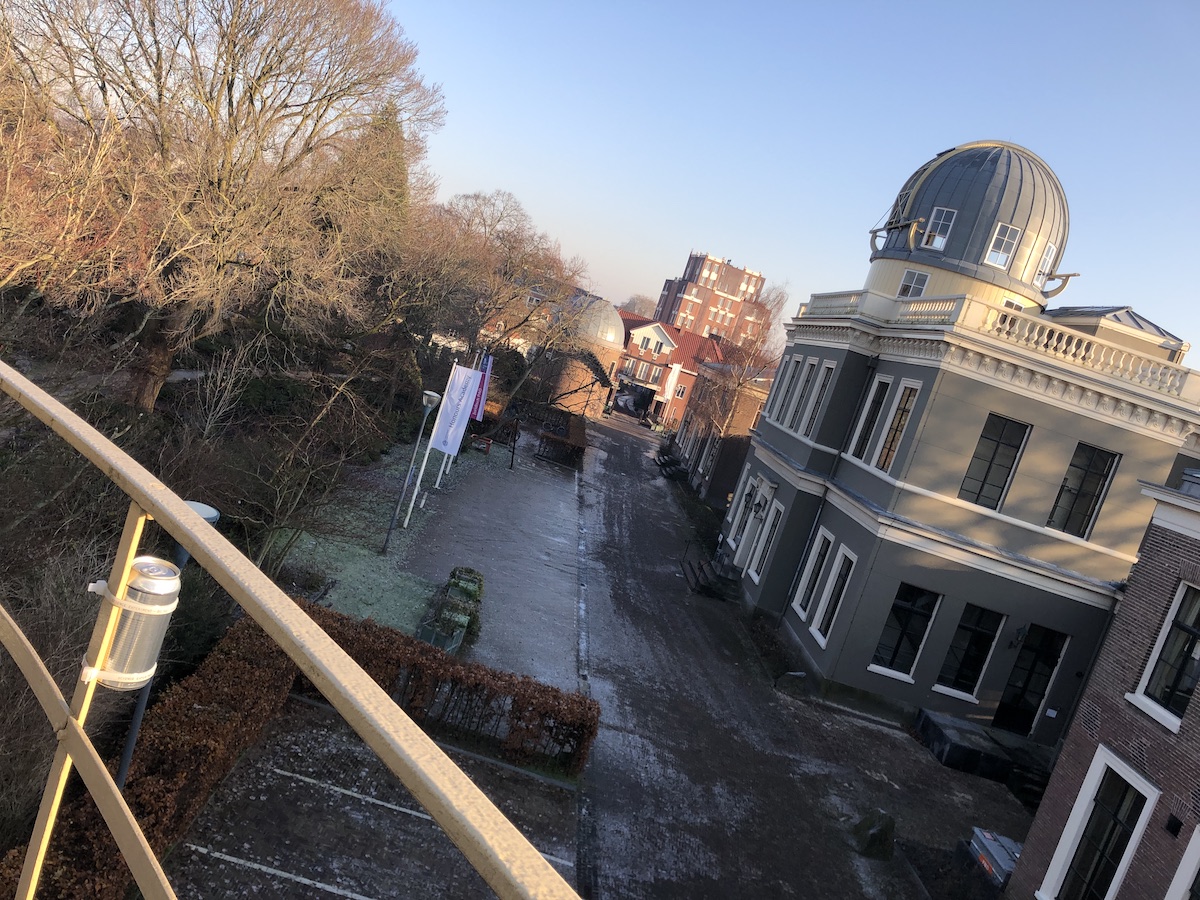
Figure 29: Location of Solarcan
The other major catch is that the two plastic tiewraps are good, but not enough to stop the camera from being rotated around a narrow enough pole. This can happen in very strong winds, or if curious people wander past and try moving it just to see what happens. This leads to another problem - these Cans are very visually appealing and so they tend to attract attention very easily. I’ve seen other cameras covered in black duct tape to make them look more innocuous, with some degree of success. This leads to the more serious problem with these cameras, especially in a country as crowded as the Netherlands: people tend to come over and look at the cameras, and occasionally vandalize or steal them.
In 2021, I put up three cans around the Old Observatory: two on the roof of the Old Observatory, and one high up on a light pole in front of the Old Observatory (just in the line of sight of this picture). The completely remote can on the roof was undisturbed, there was one can fixed to the railings next to the large dome which was clearly moved at some point during the months by a curious Observatory visitor, and the final can that was visible and in a public space disappeared without trace after two months.
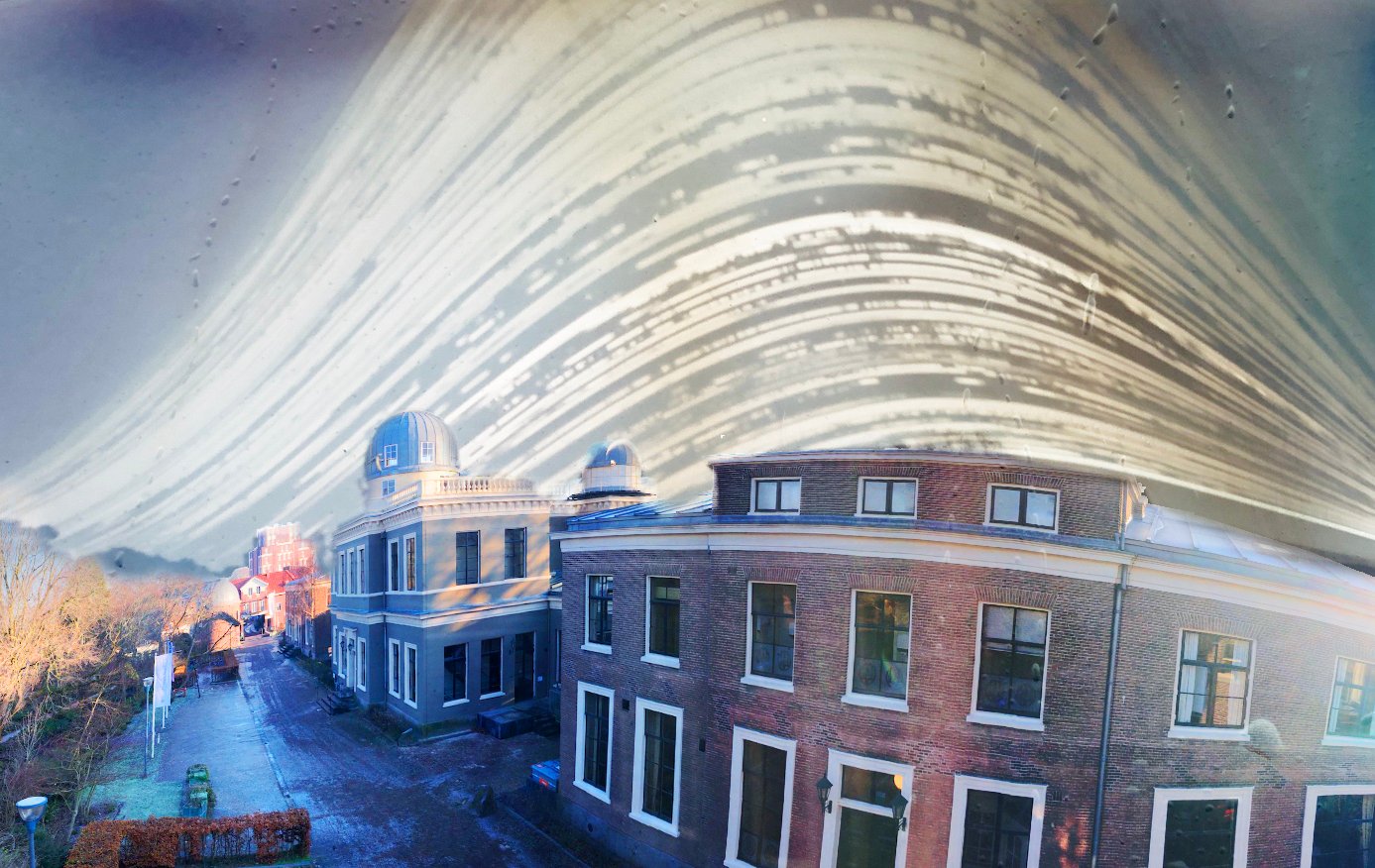
Figure 30: Old Observatory pinhole composite
In retrospect, the photo would not have worked out. So I talked with the members of the smaller observatory outside the Old building, and they kindly let me fix the Solarcan in an area that was completely private but allowed for a wide view of the horizon. This ensured that the camera was completely undisturbed, resulting in the fantastic capture seen here. The social media account of the SolarCan company saw my photos of the pinhole image and the same panoramic photo I took of the view that the pinhole camera had, and photoshopped them together to make a really great image.